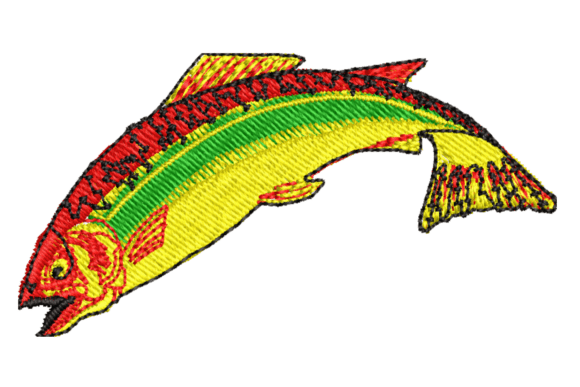
Beautiful Fish Embroidery Design Review
First Impression: Elegant, Playful, and Distinctly Handmade
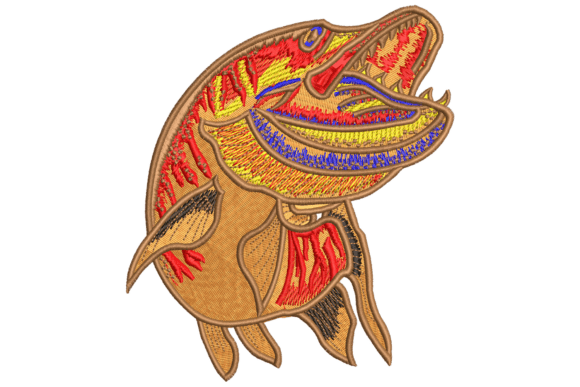
As an embroidery designer who’s developed hundreds of commercial designs for small businesses—from florists to coastal cafés—I opened Beautiful Fish expecting charm. What I found was more: a confident fusion of organic flow and ornamental precision. The floral and leafy patterns wrapping the fish’s body signal craftsmanship, not clipart. It reads as elegant, not fussy; playful, not childish; and unmistakably handmade—a critical differentiator for boutique brands competing with mass-produced logos. For a small business owner choosing between generic icons and signature design assets, Beautiful Fish lands firmly in the “signature” category.
Real-World Business Use: Where This Design Shines
Beautiful Fish isn’t just decorative—it’s functional branding. I’ve tested similar motifs across dozens of client projects, and this design excels where visual storytelling matters most:
- Embroidered patches: Its balanced silhouette and clear internal contrast make it ideal for 2.5"–3.5" woven or chenille patches—perfect for aprons, tote bags, or staff jackets.
- Cap embroidery: At 2" wide on a curved front panel, the fish’s central form holds legibility while the trailing leaves add subtle motion—no crowding, no distortion.
- Apron embroidery: Positioned on the chest or pocket, Beautiful Fish elevates utilitarian wear into branded experience—especially for bakeries, florists, or seaside boutiques leaning into artisanal warmth.
- Tote bag design: On natural canvas or unbleached cotton, its botanical rhythm complements eco-conscious values without shouting. No background fill needed—it breathes.
- Custom apparel accents: Think sleeve details on linen shirts, back-of-neck highlights on summer tees, or subtle hem tags on reusable produce bags.
- Product packaging accents: As a small embroidered label on ceramic mugs, soap wraps, or seed packet sleeves, it reinforces handmade authenticity at point of touch.
Where to Use Beautiful Fish With Intention
Not every surface is equal—and Beautiful Fish rewards thoughtful placement. Avoid forcing it onto:
- Sub-2" patches: Fine leaf veins and delicate petal spacing may blur or stitch poorly below 1.75". Always run a test sew at your target size.
- High-curved cap fronts (e.g., structured baseball caps): The fish’s lateral width can stretch if digitized without curve compensation—confirm the embroidery file includes underlay and pull compensation.
- Dark uniforms without thread contrast testing: Light greens or creams may disappear on navy or charcoal. Try matte black or deep teal thread first.
- Fabrics with heavy texture: Terry cloth, bouclé, or thick denim can swallow fine detail. Add cutaway stabilizer and reduce top tension slightly.
- Items requiring frequent washing: High stitch density in floral areas demands secure backing—don’t skip tear-away + cutaway combo stabilizer for longevity.
Brand Identity Impact: More Than Just a Logo
For small businesses, consistency builds trust—and Beautiful Fish delivers visual continuity across touchpoints. When used as a chest logo on staff aprons *and* as a subtle corner motif on printable mockups *and* as a stitched tag on product packaging, it becomes a quiet signature. Customers begin to associate that graceful curve and botanical rhythm with care, creativity, and local intention—not just “a fish.” That recognition compounds: a customer sees it on a café apron, then on a tote at the farmers’ market, then on a ceramic mug at checkout—and each repetition deepens brand recall without repetition fatigue. Unlike rigid monograms or overused seashell icons, Beautiful Fish feels human-scaled and story-driven—ideal for handmade product lines where buyers value narrative as much as utility.
Practical Designer Notes Before You Stitch
Before committing to production, treat Beautiful Fish like any high-value design asset:
- Test in black and white first: Print the design outline at actual size to assess spacing, balance, and negative space—critical for small patch applications.
- Verify small-size performance: Sew a 2" version on your target fabric/stabilizer combo before bulk runs.
- Review thread color contrast: Especially across light/dark garment variants—what reads clearly on ivory linen may vanish on heather grey.
- Inspect internal spacing: Ensure leaf stems don’t crowd the fish’s eye or tail tip—tight gaps cause thread nesting or skipped stitches.
- Confirm hoop size compatibility: Does the design fit comfortably within your standard 4x4 or 5x7 hoop? Oversized hoops increase setup time and cost.
- Test on real fabric: Mock up on the exact material you’ll use—canvas behaves differently than twill, which behaves differently than organic cotton.
- Use proper stabilizer: Lightweight cutaway for stable wovens; tear-away + fusible for knits; heavy cutaway for textured fabrics.
- Create a printable mockup for client approval: Show how Beautiful Fish looks on a real apron or tote—not just a digital grid.
- Compare beside other design assets: Does it harmonize with your existing logo, typography, or secondary icons—or does it compete?
- Confirm commercial licensing: Ensure the digital embroidery file permits use on merchandise sold to end customers—many hobbyist files prohibit resale.
Final Thought: A Strategic Asset, Not Just a Pretty Fish
Beautiful Fish earns its place in your design library because it bridges aesthetics and action. It’s not merely a machine embroidery design—it’s a versatile, scalable piece of brand language. Whether stitched on a barista’s apron, heat-applied as a patch on a limited-run tote, or scaled down as a subtle tag on handmade soap, it communicates care, craft, and coastal calm without saying a word. For small business merch, that quiet confidence is worth every stitch.